Practical guide
How to create a learning plan you can actually finish
Define the outcome, diagnose the starting point, sequence milestones, design practice, and build a schedule that survives real life.
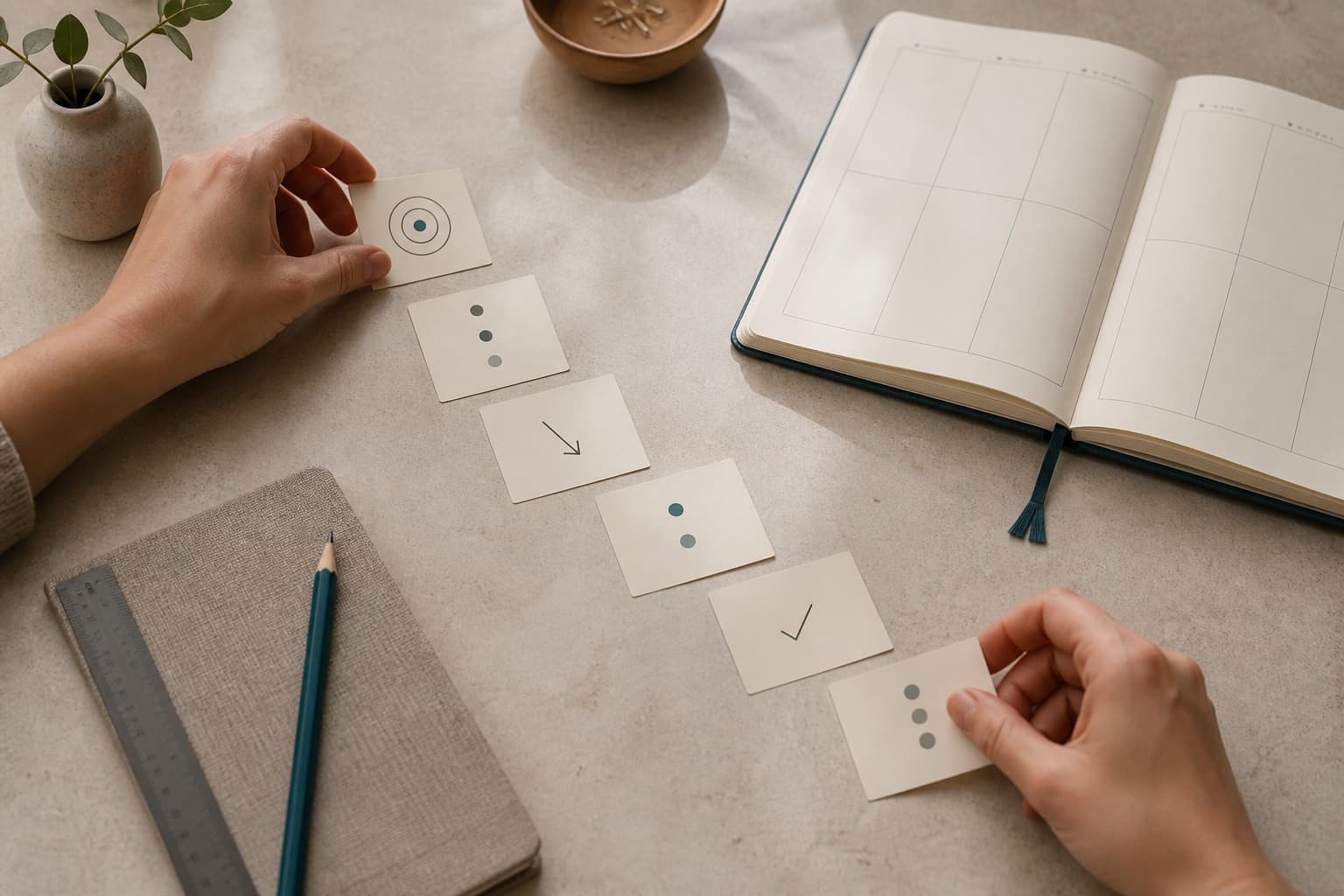
A learning plan is useful when it changes what you do next. It should reduce uncertainty, protect practice time, and make progress observable. A long reading list does none of those things on its own.
The framework below works for professional skills, interview preparation, technical topics, and certifications. The subject changes; the planning decisions remain remarkably consistent.
Build the plan in seven decisions
Step 1
Write a performance outcome
Describe what you need to do in a real context, for whom, and by when. Replace “learn Kubernetes” with a demonstrable outcome such as diagnosing and improving a production deployment.
Step 2
Define evidence
Decide what would convince a reasonable observer that you improved: an explanation, scenario response, working artifact, practice score, or repeated performance.
Step 3
Diagnose the starting point
List relevant experience and test uncertain areas with a short task. Self-confidence alone is not a reliable prerequisite check.
Step 4
Map capabilities and prerequisites
Break the outcome into capabilities, then order the knowledge and practice each capability depends on.
Step 5
Create milestone sessions
Give every session a clear objective, an explanation or example, an active task, and an estimated duration.
Step 6
Schedule below maximum capacity
Use the hours you can sustain on an ordinary week and keep a buffer for missed work and final integration.
Step 7
Review evidence and adapt
Change future depth, examples, and review based on performance while preserving completed work and the reason for each change.
Design sessions around an action
A good session objective begins with a verb: explain, compare, diagnose, design, prioritize, negotiate, or demonstrate. The lesson should give the minimum context needed to attempt that action, show a worked example, surface common mistakes, and end with practice that requires a response.
When a topic is large, reduce scope rather than turning the session into a survey. Finishing a narrow loop of explanation and practice is usually more valuable than touching ten ideas without using any of them.
Make the schedule honest
- Plan with sustainable weekly hours, not your most optimistic week.
- Include review and assessment time in the estimate.
- Place high-dependency concepts early and integration practice near the end.
- Keep at least one buffer block before a fixed deadline.
- When sessions slip, redistribute future work instead of pretending the original calendar is intact.
Use a weekly review question
At the end of each week, ask: what can I now do without help, what remains fragile, and what should change next week? The answers are more useful than counting pages read. Save specific weak concepts so they can return after a delay.
Sources and further reading
- How People Learn — National AcademiesA broad synthesis of research on prior knowledge, understanding, transfer, and learning environments.
- Improving Students’ Learning With Effective Learning TechniquesAn overview of learning techniques including practice testing and distributed practice.
Build a path around your goal
Learning Planner turns your outcome, experience, available time, and weak areas into a structured course with on-demand lessons, practical assessments, and adaptive review.